



Japanese and English Pokémon booster boxes are both official products from The Pokémon Company, so the choice is never about authenticity. It comes down to what you plan to do with the box: Japanese product usually gives more hits for the money, while English product sells into a far bigger market. Here is how the two stack up.
The Short Version, by Goal
- Ripping packs or chasing singles: Japanese boxes generally deliver more hits per dollar.
- Reselling singles in the West: English cards fetch higher prices and reach many more buyers.
- Keeping boxes sealed: both have a history of holding value. English special sets draw the widest collector interest, while Japanese exclusives benefit from short print windows.
Side-by-Side Specs
| Feature | Japanese box | English box |
|---|---|---|
| Packs in a box | 30 | 36 |
| Cards in a pack | 5–7, varies by set | 10 |
| Usual price per box | Lower | Higher |
| Guaranteed hits | Most modern sets promise at least one SR or better per box | None; pull rates vary from box to box |
| Print and centering | Reliably sharp centering and texture | Solid, with more centering variation |
The guaranteed hit is the biggest practical difference. Open a modern Japanese booster box and you know roughly the minimum you will pull. An English box might hold a monster card or nothing special at all, and that uncertainty is part of why sealed English boxes trade with a gamble-style premium baked in.
Cost Per Hit vs Market Size
Cheaper boxes plus steadier rare odds mean Japanese product usually wins on cost per hit. Japanese alt-art cards also tend to arrive months ahead of their English counterparts, so collectors chasing particular artwork often go Japanese first.
English product answers with sheer demand. In the West, the English singles market dwarfs the Japanese one, and a graded English copy usually outsells the same card graded in Japanese. For buyers who crack boxes, send cards for grading and then sell to customers in America or Europe, English product is simply easier to turn into cash.
Release Timing and Japan-Only Products
Japan gets new sets before the English release, often by months, and some items never leave the country at all. Exclusives from the Pokémon Center, special boxed sets and certain promos are printed only for the Japanese market, which explains the premiums Western collectors are willing to pay. Browse the Japanese cards range to find these exclusives alongside standard boxes.
Holding Sealed Product Long Term
Each language has a solid record after a set leaves print, though they behave differently:
- English: flagship and nostalgia releases, such as 151-style products and anniversary sets, attract the deepest long-term demand thanks to the huge global collector base. Factory-sealed English cases are the favored holding format because provenance is simple to prove.
- Japanese: short print runs mean supply vanishes quickly. Out-of-print boxes from popular Japanese sets have frequently done well, although the resale market is smaller and more specialized.
Past results promise nothing: prices can fall as well as rise, and this is not financial advice.
Condition in Transit
Japanese boxes travel in compact, tightly packed cartons and usually arrive in cleaner shape after international freight, which matters if you resell mint sealed boxes. Whichever language you choose, ask for tracked delivery and sturdy outer cartons.
Common Questions
Can you play Japanese cards at English tournaments?
Many official Western events require cards in the local language or a translation reference, so check the rules for your region. For collecting, language is no obstacle.
If Japanese print quality is better, why are the boxes cheaper?
Japan receives a large print allocation relative to local demand, and retail prices there start lower. Export demand tends to narrow that gap over time.
Are there fewer cards in a Japanese box?
Yes: 30 packs of 5–7 cards against 36 packs of 10. Raw card count is the wrong yardstick, though. What matters is your chance at a chase card per dollar spent, and Japanese boxes usually come out ahead there.
The Verdict
For most buyers, the best answer is a mix of both. Resellers often pair quick-selling English ETBs and booster boxes for steady revenue with Japanese boxes and Japan-only releases that carry better margins. Budget collectors who simply love opening packs usually get more enjoyment from Japanese product. Booster Bay TCG, based in Tokyo, stocks factory-sealed boxes in both languages, sourced from official distributors.
We use cookies to improve your experience. By continuing, you agree to our cookie policy.
I AcceptYour Cart
Add $499.00 more to get free shipping!
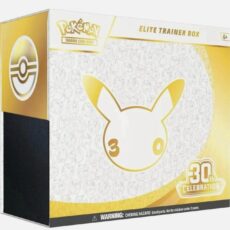
Pokemon 30th Anniversary Celebration ETB Sealed Boxes
Original price was: $175.00.$165.00Current price is: $165.00.
30th Celebration Booster Bundle box
Original price was: $130.00.$110.00Current price is: $110.00.30th Celebration Booster Bundle Case
Original price was: $2,890.00.$2,750.00Current price is: $2,750.00.Pokemon 30th Anniversary Celebration ETB Sealed Case 10 Boxes NEW
Original price was: $1,750.00.$1,650.00Current price is: $1,650.00.- Email:info@boosterbaytcg.com
- Address:Higashiikebukuro 1-23-9, Toshima City, Tokyo
All Categories
Search
Pokemon 30th Anniversary Celebration ETB Sealed Boxes
Original price was: $175.00.$165.00Current price is: $165.00.30th Celebration Booster Bundle box
Original price was: $130.00.$110.00Current price is: $110.00.30th Celebration Booster Bundle Case
Original price was: $2,890.00.$2,750.00Current price is: $2,750.00.
Total 1 Comment
[…] demand runs deepest. Japanese boxes cost less and offer better pull rates with hit guarantees; the comparison of Japanese and English boxes has the details. Browse the full booster box […]